Most residency interviews happen over video now, and video changes what the first minute is made of. Before you have answered anything of substance, the interviewer has already read your camera angle, your lighting, your background, and how you carry the first ten seconds. None of it is on the score sheet, and all of it shapes the read.
The setup is content
A face lit from a window behind you is a silhouette. A camera below your chin is an unflattering angle. A laptop microphone in a hard, echoing room is a voice that tires the listener out. These are not vanity problems. An interviewer straining to see or hear you spends attention on the signal instead of on what you are saying, and that attention does not come back. Fixing the setup is the cheapest points in the whole season.
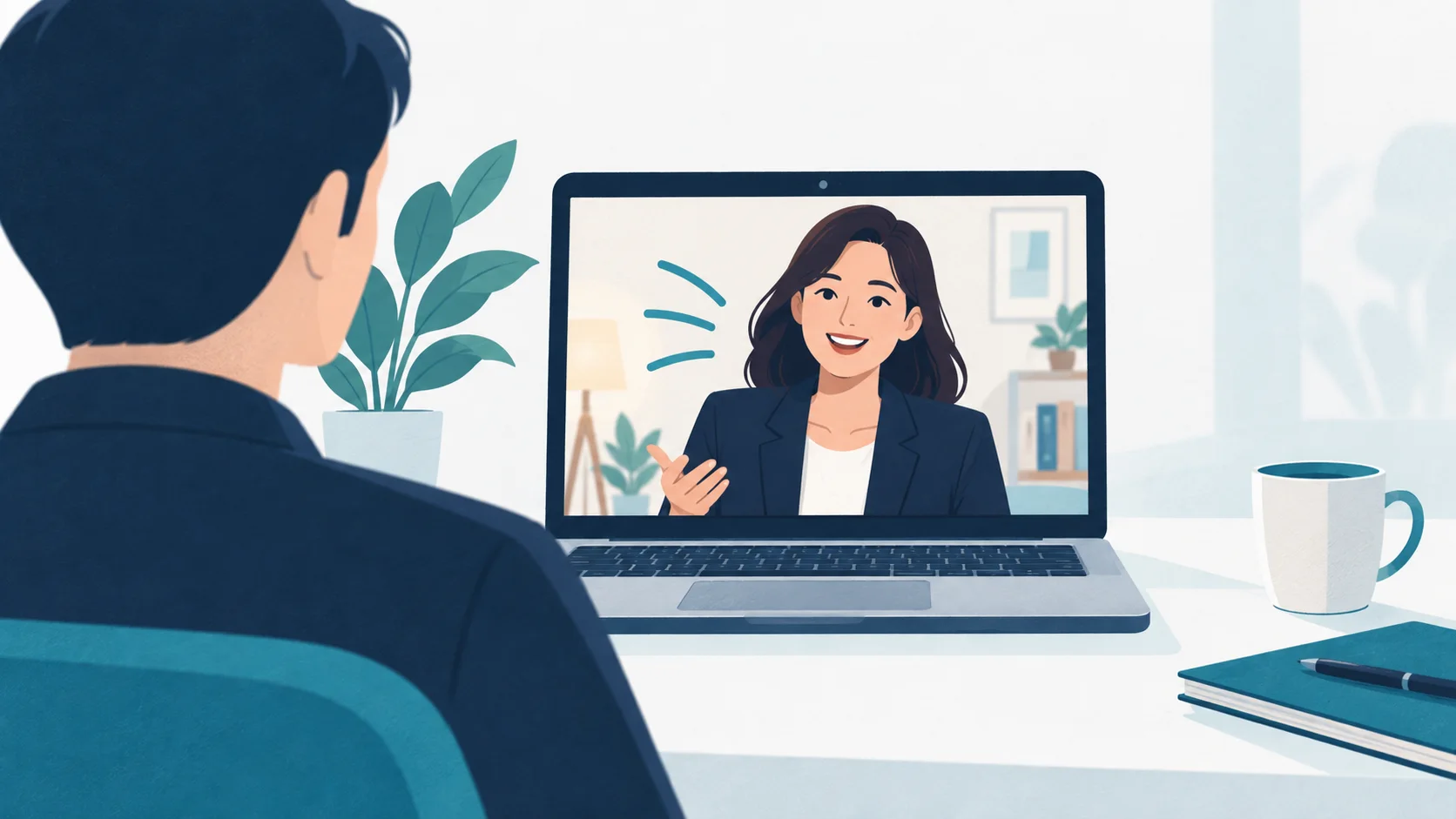
- Camera at eye level, light in front of you, a plain and tidy background.
- Test the exact setup you will use, on the same connection, before the day. Half of first-minute trouble is logistics, not nerves.
- Look at the lens, not the face on the screen, when you speak. That is the difference between eye contact and looking away.
- Use a wired connection or the strongest signal you have; a frozen frame during your best answer is a wasted answer.
On video the interviewer judges the signal before the substance. Fix the signal, and the substance gets a fair hearing.
The first ten seconds
Come on camera settled, not scrambling for a cable. A short, warm greeting and a real smile do more than any opening line, because they answer the quiet question every interviewer starts with: is this someone I want next to me at three in the morning. For an IMG interviewing in a second language, the pull is to lead with proof of competence. Lead with ease instead. Competence is the rest of the hour; the first ten seconds are about whether the room relaxes.
Takeaways
- Treat camera, light, and sound as part of your answer; a poor signal costs points no content recovers.
- Test the real setup before the day, and look at the lens, not the screen.
- Open settled and warm; the first ten seconds set the tone, not the transcript.