
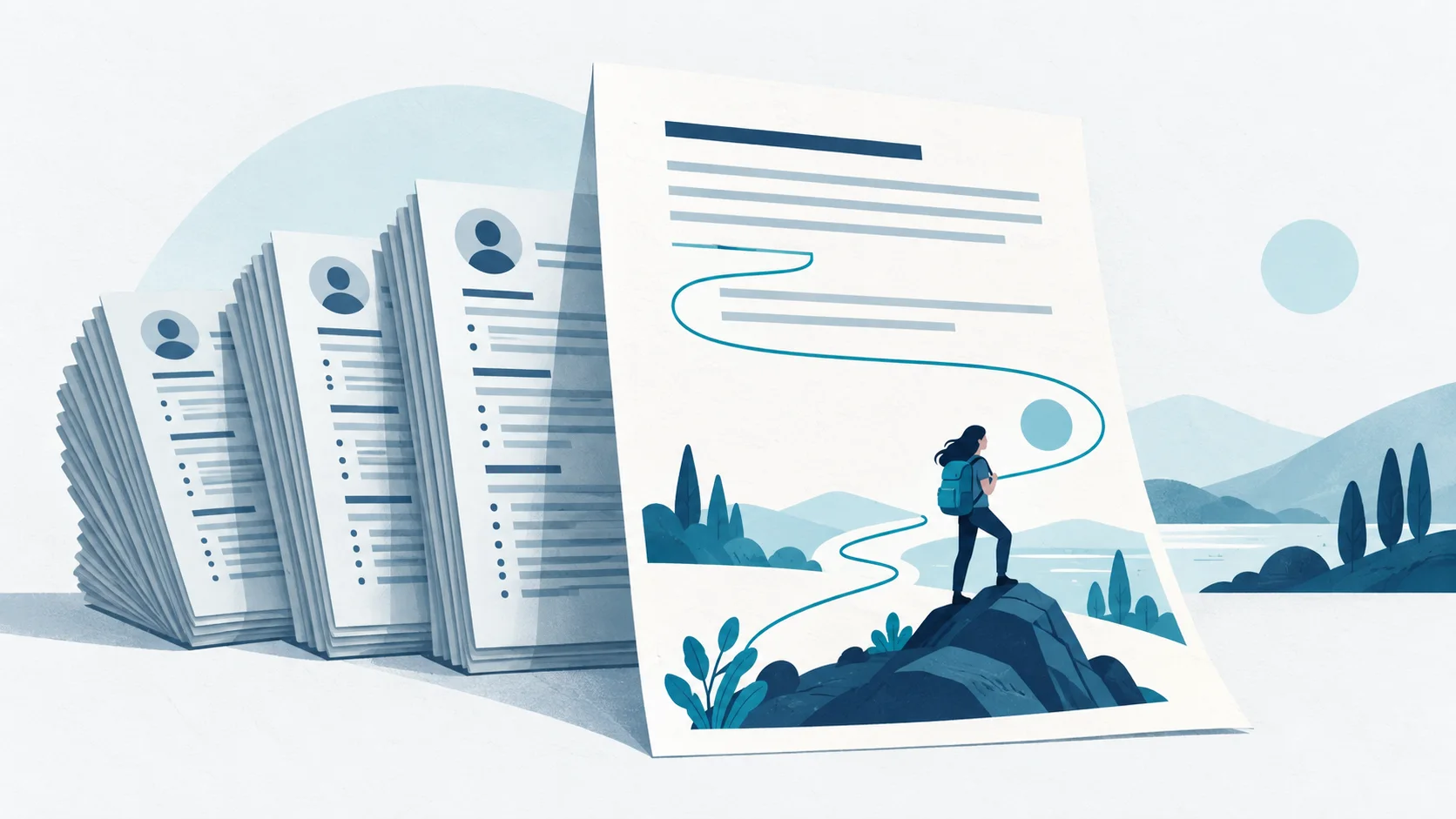
The most common personal statement is a chronological tour: medical school, the exam scores, the rotations, the research project, each paragraph a CV line wearing sentences. Reviewers read it in ninety seconds, learn nothing they did not already have in a table, and move on. The document cost you weeks and bought you nothing.
What the statement is for
Every other document in your file is structured data someone else compiled: scores, dates, titles, counts. The statement is the only page where you choose the content. Its job is to answer the two questions the structured data cannot: why this specialty, specifically, and what kind of doctor you are when nobody is grading you. One story, told properly, answers both. The story you pick should carry the one attribute no other applicant can claim, the thing a reviewer would remember you by after a hundred files. Ten accomplishments, listed again, answer neither.
The reviewer already knows what you did. The statement exists to explain why it mattered and where it is pointing.
The one-story structure
- Open inside a specific moment: a patient, a decision, a failure, a shift. Specific means it could not appear in anyone else's statement.
- Let the story surface the reason for the specialty. "I chose internal medicine because..." is weaker than a story in which the choice becomes obvious.
- Spend the middle on what the experience changed in how you work; that is the character evidence reviewers are actually reading for.
- Close forwards: what you want from training and what a programme gets in you. One paragraph, no grand claims.
IMG-specific traps
Do not spend your one page justifying your existence. A paragraph explaining that IMGs work hard, or apologising for your medical school, wastes the page on a conversation nobody opened. If your record has something a reviewer will genuinely pause on, a gap, an attempt, a career change, address it in two direct sentences and move on. Explanation reads as strength; apology reads as doubt. And write it in your own English: a statement audibly ghost-written or machine-polished into blandness discards the one document that was supposed to sound like you.
Takeaways
- One story, one specialty reason, one page. For an IMG it is often the single most decisive page you control.
- Cut any paragraph that restates something the CV already carries.
- Address weaknesses in two sentences of explanation, never in apology.